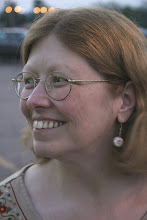
Lauren B. Davis’ new novel, Our Daily Bread (Wordcraft of Oregon, September 2011), is a story of insiders and outsiders – and it’s also about the difference between outsiders (community members who internalize feelings of difference) and outcasts (those who are banished by the community). The situation of the story is based on the infamous Goler clan of Nova Scotia, who were finally charged and brought to trial in the 1980s after generations of child abuse, rape, incest, and other violent crimes. In Davis’ backstory, she tells of wanting to write about how communities can marginalize people into “us” and “them.” Having lived in Nova Scotia in the early 1970s for a short time, she’d heard stories of the Goler clan, and she explains that “the extreme marginalization of the community and the terrible ostracism haunted me and it seemed the perfect framework to explore how such ordinary people could do such dreadful things, or permit such dreadful things to continue.”
 Set in the fictional town of Gideon, Our Daily Bread is told from multiple points of view. Main characters are bread deliveryman Tom Evans and his two children, fifteen-year-old Bobby and ten-year-old Ivy; Dorothy Carlisle, a widow who owns an antique shop and befriends Ivy Evans when she is bullied by classmates walking home from school past the store; and Albert Erskine, who longs for a life different from the one he was born into and forms a friendship with younger Bobby Evans. Each of these main characters has secrets, and each feels apart from the others in their own way. At the heart of this story is loneliness through isolation, abandonment, and exclusion. Issues are substance abuse and addiction, poverty, and ignorance.
The fictional Erskine clan is based on the Goler clan. The Erskine patriarch and uncles are moonshiners turned meth makers, and children on the mountain grow up terrorized, hungry, and living in dire poverty. The townspeople of Gideon turn a blind eye to what happens on the mountain as long as it stays on the mountain and doesn’t concern them. But, of course, the two worlds do not remain separate, and when the isolation of the mountain is breached by insiders and outsiders alike, events ignite.
Divisions separating the characters in the town of Gideon are familial, societal, theological, and even geographical in nature. These motifs run through Davis’ work (she is the author of five books) including her terrific blog, “View From The Library Window.” A few years back I read her excellent novel The Radiant City, a book I still think about, the characters still haunting me. I was a bit hesitant about this new novel, mostly because the title and the cover image reminded me a little too much of the religious tracts and evangelical churches of my childhood, until a description labeling the novel as “backwoods noir
 at its best” sparked my interest. I dug a little further and found an author’s note where Davis wrote, “My family, afflicted by mental illness and alcoholism, was going through a rough time the summer I was nine. I was an only child, and adopted, and rather bookish and prone to making up stories, all of which helped to make me ‘Other’ in the eyes of some of the children in the neighborhood. That summer a lady who owned a little antique shop near my house let me hang out around the store . . . it was a refuge from loneliness and bullying and I’ve never forgotten it.” OK, now I was really interested.
 Reading
 Our Daily Bread, Davis hooked me early in the first chapter, and her well-paced suspenseful story kept me spellbound for long stretches of time. I had to find out what happened next. And when I finished the book, I knew I would have a very hard time selecting what book to read next that would hold my attention and keep me turning the pages in the same way. Each of the main characters was interesting, but the most complex by far is Albert Erskine. For me, this was Albert’s story, and it will stay with me for a very long time. Davis taps into deep human emotion and shows us our own darkest and brightest sides. I highly recommend this book.


 Posts
Posts